Life Coaching for Smart Women at a Crossroads
About Suzy and her
Mission for you to

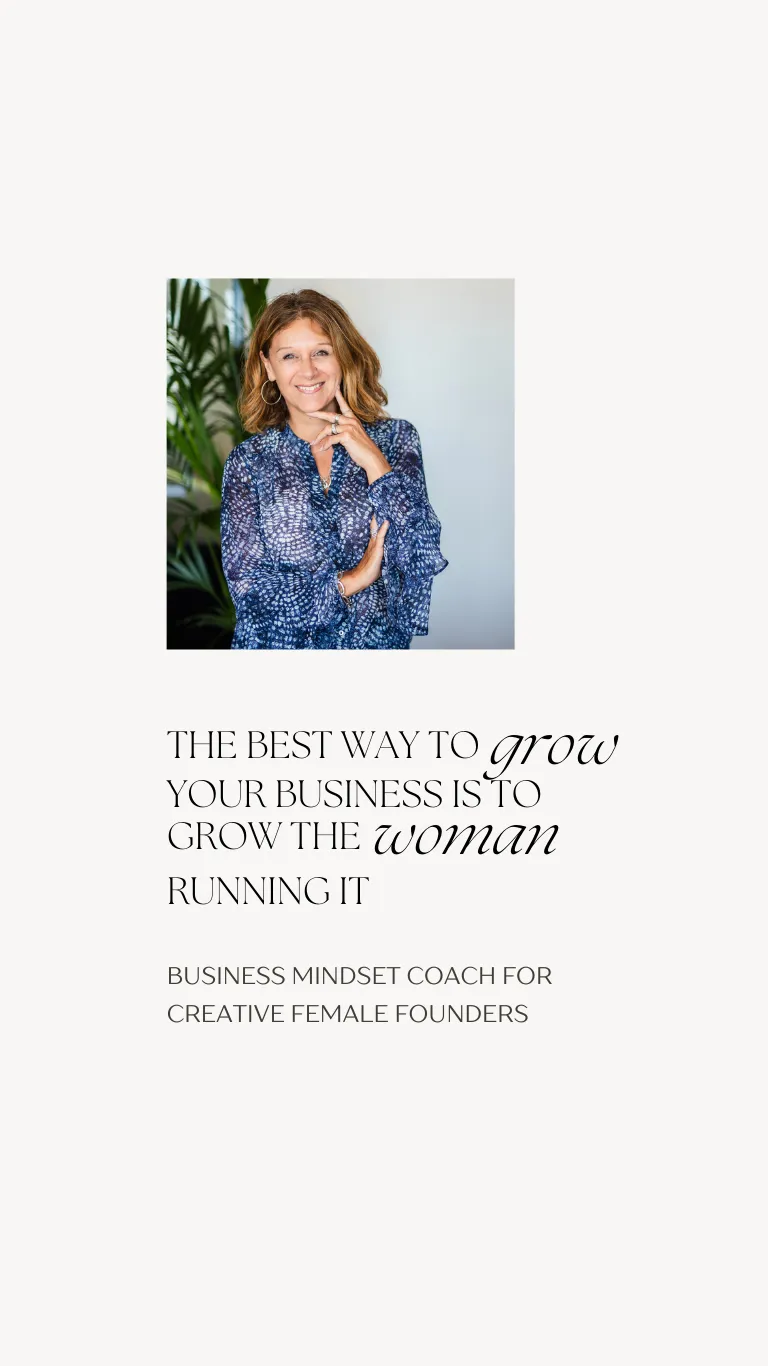
Business & Mindset Coach for
Creative Female Entrepreneurs
Helping you grow an incredible business by
growing the amazing women running it.
Welcome to Become HER Coaching
WHERE I SPECIALISE IN EMPOWERING CREATIVE
FEMALE BUSINESS OWNERS AND LEADERS
To embrace their individuality as a source of confidence and achieve the heights they dream of, without compromising or sacrificing their health, relationships and private lives.
ARE YOU READY TO BECOME HER? LET'S GET STARTED


I'm a passionate advocate for women's
empowerment, growth, self care and individuality.
With a blend of personal experiences, coaching strategies and methodologies, and powerful tools, I help women turn their visions into reality.
I find immense joy in sharing the invaluable lessons I've learned throughout my journey leading a successful exhibition design agency for more than 25 years.
My coaching style is a fusion of creativity, strategy, and unwavering support, using a combination of CBT, NLP and EFT modalities and I use a unique psychometric assessment for resilience & wellbeing at work (Wraw).
I believe that within each of us lies the strength to tackle life's challenges and that we don't need to "have it all"; we just deserve to have what we truly desire.
Are you ready to Become HER, an entrepreneur who embodies authenticity, innovation and impact?
BECOME HER
BECOME HER
When you work through my signature programme you embark on a life changing journey of transformation as we get laser focus on your Vision, Mindset, Strategy, Power, and Balance. Together, we tackle common challenges such as confidence, clarity, imposter syndrome, procrastination, decision-making, work/life balance, money mindset and the pursuit of growth and visibility. You will discover the three key invisible barriers to your success and how to break through them.
Become HER is a journey where you collect and collate all your wisdom, experience and knowledge, embrace your unique individuality and let it be the source of your confidence so you are unstoppable in your beliefs and what you can achieve.
When you work through my signature programme you embark on a life changing journey of transformation: Vision, Mindset, Strategy, Power, and Balance. Together, we tackle common challenges such as confidence, clarity, imposter syndrome, procrastination, decision-making, and the pursuit of growth and visibility. You will discover the three key invisible barriers to your success and how to break through them.
Become HER is a journey where you collect and collate all your wisdom, experience and knowledge, embrace your unique individuality and let it be the source of your confidence so you are unstoppable in your beliefs and what you can achieve.
MY MISSION
MY MISSION
To create a tribe—a community where women feel seen, heard, visible, and supported for their uniqueness, passions, and individuality. I'm dedicated to providing a space where women business owners can find a sense of belonging while stepping away from societal expectations and to use my gifts of experience, learning and belief to amplify the self-worth and net-worth of my clients.
To create a tribe, a community where women feel seen, heard, visible, and supported for their uniqueness, passions, and individuality. I'm dedicated to providing a space where women business owners can find a sense of belonging while stepping away from societal expectations and to use my gifts of experience, learning and belief to amplify the self-worth and net-worth of my clients.
BELIEVE | CREATE | BECOME
1:1 Coaching
Become HER Membership
VIP Mindset & Strategy Days
Group Programmes
Workshops
Retreats


The Smarter Way to Think About Your Business
Welcome to
My Blog Page
A collection of straight-talking pieces for women running real businesses.
Practical thinking. Useful perspective.
These articles come from the conversations that happen every week around pricing, clients, delivery models, time, and the role we play inside our own business.
If you are looking for a smarter way to run your business, you'll enoy these.

Lost Passion for Your Job After Promotion? Here's Why (And What To Do)
I've Lost My Passion for My Job. Is That Normal After Promotion?
What happens to the love you had for your work when you become a leader and how to find it again
You used to love this.
You remember it clearly. The energy you brought to a new brief. The satisfaction of a project landing perfectly. The feeling at the end of a big event when everything had gone to plan and the client was delighted. You used to drive home thinking: "I can't believe I get paid to do this."
When did that stop?
You're not sure exactly. It happened gradually. The late nights stopped feeling exciting and started feeling draining. The client calls stopped feeling energising and started feeling like obligations. You sit in meetings now and find yourself watching the clock in a way you never used to.
You still do the job well. Your team would never know. Your MD would never know. But behind the professional mask, there's a quiet grief for something you've lost.
The passion. The joy. The sense that this work means something to you.
And with it, a question that you don't quite know how to ask out loud: Is this just what leadership feels like? Or have I made a terrible mistake?
First: What You're Feeling Is Real, And It's Common
This isn't weakness. It isn't ingratitude. It isn't a character flaw.
It's one of the most common and least-discussed experiences of promotion into senior leadership - particularly in creative, experiential and events agencies where people fell in love with the work itself, not with managing other people's work.
Here's what typically happens.
You were brilliant at delivery. You loved the craft - the creative problem-solving, the client relationships, the making things happen. You were promoted because of that brilliance.
And then, gradually, the job stopped being about the things you loved. It became about meetings, line management, budget conversations, performance reviews, strategic planning, internal politics. The craft moved further and further away. Your best hours are no longer spent doing the work you fell in love with - they're spent in conversations about that work. Or emails about that work. Or review processes for that work.
You didn't lose passion for your work. You got promoted away from it.
That's a very different problem with a very different solution.
The Three Versions of Lost Passion
In my experience coaching senior agency leaders, lost passion usually takes one of three forms. It's worth understanding which one you're experiencing, because they have different causes and different solutions.
Version 1: You Miss The Craft
You became a Senior Manager because you were exceptional at production. Or a Client Services Director because you were brilliant at client relationships. The craft, the actual doing of the thing you were trained for and talented at was your source of meaning.
Now you manage people who do the craft. You review their work. You sit in strategy meetings about the craft. You occasionally get to touch it yourself, which is simultaneously joyful and painful because it reminds you of what you're missing.
The feeling: A specific grief for the hands-on work. Often accompanied by a sneaking suspicion that your team aren't doing it quite as well as you would.
What's actually happening: Your identity was built around being excellent at delivery. Leadership asks you to derive meaning from other people's excellence rather than your own. That's a profound identity shift that most people make without any support or acknowledgement.
Version 2: You're Exhausted and You've Forgotten What You Feel
You've been running so hard for so long that you've lost touch with what you feel about the work. You're not sure if you've lost passion or if you've just lost the capacity to feel it under the weight of everything else.
The feeling: More like numbness than grief. A flatness. Going through the motions.
What's actually happening: You're likely operating Below the Line - firefighting, doing, solving, reacting. When you're in pure survival mode, there's no bandwidth for the deeper experience of meaning and joy. The passion hasn't gone. It's buried under exhaustion.
Version 3: Leadership Itself Doesn't Suit You (Yet)
You were given a leadership role and discovered that leadership, as you're currently doing it, doesn't engage you in the way delivery did. The meetings feel pointless. The people management feels draining. The strategic conversations feel abstract. You're not bad at it - but you don't love it.
The feeling: A sense that you're in the wrong role, doing the wrong thing, being the wrong person.
What's actually happening: You're experiencing leadership as it's commonly done in agencies, not as it could be done. Leadership, done well, is actually one of the most challenging, creative and satisfying things a person can do. But you haven't experienced that version of it yet.
Why This Happens So Often In Creative Agencies
The people who end up in senior leadership roles in creative agencies are, almost by definition, people who were passionate about the work itself.
You didn't become a Producer because you loved managing spreadsheets. You became a Producer because you loved the energy and craft of making things happen. You didn't become an Account Director because you loved internal meetings. You became an Account Director because you thrived on building genuine client relationships and delivering brilliant work.
The people most likely to be promoted are the people most likely to miss what they're promoted away from.
There's also an industry culture element. Creative agencies can treat leadership as a burden to be managed rather than a craft to be developed. Leadership development is rare. Senior leaders are often left to figure it out alone. The support that would help someone find meaning in leadership - coaching, frameworks, peer support - is frequently absent.
So you're promoted. You lose touch with the craft you loved. You don't have the support to find meaning in leadership. And you conclude that the passion is gone.
It doesn't have to be.
What Finding Passion in Leadership Actually Requires
Here's what I've learned from coaching senior agency leaders and myself through this transition:
Passion in leadership comes from different sources than passion in delivery.
When you loved delivery, you found meaning in:
Your own excellence
Tangible outcomes you created
Client satisfaction with YOUR work
The craft itself
Leadership at its best offers meaning through:
Other people's growth (that you enabled)
Team outcomes that wouldn't have been possible without your direction
Watching someone you developed deliver something brilliant
Creating the conditions for a team to be exceptional
Strategic impact that operates at a scale you couldn't reach as an individual
The question is: have you ever experienced leadership in that way?
Most people I work with haven't. They've experienced leadership as firefighting and administration and being pulled in twelve directions. They've never experienced the deep satisfaction of watching a team member they've developed handle a situation that would have derailed them six months ago. Or landing a piece of strategy that genuinely moves the business forward. Or building a team culture that makes people excited to come to work.
That version of leadership is possible. But it requires operating Above the Line.
Three Things Worth Trying
1. Don't Decide Anything Yet
The feeling of lost passion is real, but it is not necessarily permanent and it is not necessarily telling you what you think it's telling you.
Before you conclude that leadership isn't for you, or that you need to leave the industry, or that something is fundamentally wrong - give yourself permission to be in the uncertainty for a moment.
Most leaders feel this way at some point in their transition. Most of the ones I've worked with who felt completely disconnected from their work eventually rediscovered meaning - not by going back to delivery, but by genuinely moving Above the Line.
2. Get Honest About What You're Actually Doing
Take a week and track how you spend your time. Specifically: how much of your week is spent on things that engage you versus things that drain you? What's the ratio of work you find meaningful to work you find pointless?
If 80% of your week is meetings you don't need to be in, tasks that should be delegated, and firefighting that better systems would prevent - the problem isn't that leadership isn't for you. The problem is that you're doing it wrong. That's fixable.
If you have genuine thinking time, strategic influence, coaching conversations with your team, and the work does engage you - but you're still feeling this way - that's a different signal worth exploring further.
3. Find One Thing to Love About Leadership
Not as a forced positivity exercise. As a genuine investigation.
Is there one person on your team whose development genuinely interests you? One client relationship that feels like real partnership? One strategic challenge that actually engages your thinking?
Start there. Build outward. Passion in leadership is rarely discovered all at once - it's built through accumulated moments of genuine engagement.
The Deeper Question
I want to offer you something that might be uncomfortable to sit with:
Sometimes the lost passion is telling you that the way you're leading isn't sustainable or meaningful. But sometimes it's also telling you that you've been so focused on what you've lost that you haven't built anything to replace it.
Delivery gave you clear feedback. You made something. The client was happy or they weren't. The event went well or it didn't. The results were immediate and tangible.
Leadership doesn't work like that. The results are slower, more diffuse, harder to see. You develop someone over six months and the payoff is a conversation in month seven when they handle something brilliantly that they couldn't have handled before. That's profound. But it requires patience and a different relationship with evidence of success.
Have you ever given yourself the chance to fall in love with that slower, deeper kind of impact?
If the answer is no - if you've been too busy firefighting to ever experience leadership at that level - then what you've lost isn't passion for your career. It's the opportunity to discover what leadership at its best actually feels like.
That opportunity isn't gone. But it requires changing how you operate.
You Don't Have to Stay Lost
If you're reading this and feeling a flicker of recognition that maybe it's not that leadership is wrong for you, but that you haven't experienced it the way it could be - I'd love to talk.
Not to tell you that everything is fine. But to have an honest conversation about whether there's a version of your leadership that could genuinely re-engage you.
That's the work I do. And it's some of the most meaningful work I know.
Book a free discovery call to talk about what you're experiencing and whether coaching might help you rediscover the work. [Book your call]
Download the free "Leadership Line Index" assessment to understand more about how your current leadership style might be affecting your experience of the work. [Take the Index]
Suzy Malhotra Founder, The Leadership Line Leadership Coach for Creative, Experiential & Events Agencies

Lost Passion for Your Job After Promotion? Here's Why (And What To Do)
I've Lost My Passion for My Job. Is That Normal After Promotion?
What happens to the love you had for your work when you become a leader and how to find it again
You used to love this.
You remember it clearly. The energy you brought to a new brief. The satisfaction of a project landing perfectly. The feeling at the end of a big event when everything had gone to plan and the client was delighted. You used to drive home thinking: "I can't believe I get paid to do this."
When did that stop?
You're not sure exactly. It happened gradually. The late nights stopped feeling exciting and started feeling draining. The client calls stopped feeling energising and started feeling like obligations. You sit in meetings now and find yourself watching the clock in a way you never used to.
You still do the job well. Your team would never know. Your MD would never know. But behind the professional mask, there's a quiet grief for something you've lost.
The passion. The joy. The sense that this work means something to you.
And with it, a question that you don't quite know how to ask out loud: Is this just what leadership feels like? Or have I made a terrible mistake?
First: What You're Feeling Is Real, And It's Common
This isn't weakness. It isn't ingratitude. It isn't a character flaw.
It's one of the most common and least-discussed experiences of promotion into senior leadership - particularly in creative, experiential and events agencies where people fell in love with the work itself, not with managing other people's work.
Here's what typically happens.
You were brilliant at delivery. You loved the craft - the creative problem-solving, the client relationships, the making things happen. You were promoted because of that brilliance.
And then, gradually, the job stopped being about the things you loved. It became about meetings, line management, budget conversations, performance reviews, strategic planning, internal politics. The craft moved further and further away. Your best hours are no longer spent doing the work you fell in love with - they're spent in conversations about that work. Or emails about that work. Or review processes for that work.
You didn't lose passion for your work. You got promoted away from it.
That's a very different problem with a very different solution.
The Three Versions of Lost Passion
In my experience coaching senior agency leaders, lost passion usually takes one of three forms. It's worth understanding which one you're experiencing, because they have different causes and different solutions.
Version 1: You Miss The Craft
You became a Senior Manager because you were exceptional at production. Or a Client Services Director because you were brilliant at client relationships. The craft, the actual doing of the thing you were trained for and talented at was your source of meaning.
Now you manage people who do the craft. You review their work. You sit in strategy meetings about the craft. You occasionally get to touch it yourself, which is simultaneously joyful and painful because it reminds you of what you're missing.
The feeling: A specific grief for the hands-on work. Often accompanied by a sneaking suspicion that your team aren't doing it quite as well as you would.
What's actually happening: Your identity was built around being excellent at delivery. Leadership asks you to derive meaning from other people's excellence rather than your own. That's a profound identity shift that most people make without any support or acknowledgement.
Version 2: You're Exhausted and You've Forgotten What You Feel
You've been running so hard for so long that you've lost touch with what you feel about the work. You're not sure if you've lost passion or if you've just lost the capacity to feel it under the weight of everything else.
The feeling: More like numbness than grief. A flatness. Going through the motions.
What's actually happening: You're likely operating Below the Line - firefighting, doing, solving, reacting. When you're in pure survival mode, there's no bandwidth for the deeper experience of meaning and joy. The passion hasn't gone. It's buried under exhaustion.
Version 3: Leadership Itself Doesn't Suit You (Yet)
You were given a leadership role and discovered that leadership, as you're currently doing it, doesn't engage you in the way delivery did. The meetings feel pointless. The people management feels draining. The strategic conversations feel abstract. You're not bad at it - but you don't love it.
The feeling: A sense that you're in the wrong role, doing the wrong thing, being the wrong person.
What's actually happening: You're experiencing leadership as it's commonly done in agencies, not as it could be done. Leadership, done well, is actually one of the most challenging, creative and satisfying things a person can do. But you haven't experienced that version of it yet.
Why This Happens So Often In Creative Agencies
The people who end up in senior leadership roles in creative agencies are, almost by definition, people who were passionate about the work itself.
You didn't become a Producer because you loved managing spreadsheets. You became a Producer because you loved the energy and craft of making things happen. You didn't become an Account Director because you loved internal meetings. You became an Account Director because you thrived on building genuine client relationships and delivering brilliant work.
The people most likely to be promoted are the people most likely to miss what they're promoted away from.
There's also an industry culture element. Creative agencies can treat leadership as a burden to be managed rather than a craft to be developed. Leadership development is rare. Senior leaders are often left to figure it out alone. The support that would help someone find meaning in leadership - coaching, frameworks, peer support - is frequently absent.
So you're promoted. You lose touch with the craft you loved. You don't have the support to find meaning in leadership. And you conclude that the passion is gone.
It doesn't have to be.
What Finding Passion in Leadership Actually Requires
Here's what I've learned from coaching senior agency leaders and myself through this transition:
Passion in leadership comes from different sources than passion in delivery.
When you loved delivery, you found meaning in:
Your own excellence
Tangible outcomes you created
Client satisfaction with YOUR work
The craft itself
Leadership at its best offers meaning through:
Other people's growth (that you enabled)
Team outcomes that wouldn't have been possible without your direction
Watching someone you developed deliver something brilliant
Creating the conditions for a team to be exceptional
Strategic impact that operates at a scale you couldn't reach as an individual
The question is: have you ever experienced leadership in that way?
Most people I work with haven't. They've experienced leadership as firefighting and administration and being pulled in twelve directions. They've never experienced the deep satisfaction of watching a team member they've developed handle a situation that would have derailed them six months ago. Or landing a piece of strategy that genuinely moves the business forward. Or building a team culture that makes people excited to come to work.
That version of leadership is possible. But it requires operating Above the Line.
Three Things Worth Trying
1. Don't Decide Anything Yet
The feeling of lost passion is real, but it is not necessarily permanent and it is not necessarily telling you what you think it's telling you.
Before you conclude that leadership isn't for you, or that you need to leave the industry, or that something is fundamentally wrong - give yourself permission to be in the uncertainty for a moment.
Most leaders feel this way at some point in their transition. Most of the ones I've worked with who felt completely disconnected from their work eventually rediscovered meaning - not by going back to delivery, but by genuinely moving Above the Line.
2. Get Honest About What You're Actually Doing
Take a week and track how you spend your time. Specifically: how much of your week is spent on things that engage you versus things that drain you? What's the ratio of work you find meaningful to work you find pointless?
If 80% of your week is meetings you don't need to be in, tasks that should be delegated, and firefighting that better systems would prevent - the problem isn't that leadership isn't for you. The problem is that you're doing it wrong. That's fixable.
If you have genuine thinking time, strategic influence, coaching conversations with your team, and the work does engage you - but you're still feeling this way - that's a different signal worth exploring further.
3. Find One Thing to Love About Leadership
Not as a forced positivity exercise. As a genuine investigation.
Is there one person on your team whose development genuinely interests you? One client relationship that feels like real partnership? One strategic challenge that actually engages your thinking?
Start there. Build outward. Passion in leadership is rarely discovered all at once - it's built through accumulated moments of genuine engagement.
The Deeper Question
I want to offer you something that might be uncomfortable to sit with:
Sometimes the lost passion is telling you that the way you're leading isn't sustainable or meaningful. But sometimes it's also telling you that you've been so focused on what you've lost that you haven't built anything to replace it.
Delivery gave you clear feedback. You made something. The client was happy or they weren't. The event went well or it didn't. The results were immediate and tangible.
Leadership doesn't work like that. The results are slower, more diffuse, harder to see. You develop someone over six months and the payoff is a conversation in month seven when they handle something brilliantly that they couldn't have handled before. That's profound. But it requires patience and a different relationship with evidence of success.
Have you ever given yourself the chance to fall in love with that slower, deeper kind of impact?
If the answer is no - if you've been too busy firefighting to ever experience leadership at that level - then what you've lost isn't passion for your career. It's the opportunity to discover what leadership at its best actually feels like.
That opportunity isn't gone. But it requires changing how you operate.
You Don't Have to Stay Lost
If you're reading this and feeling a flicker of recognition that maybe it's not that leadership is wrong for you, but that you haven't experienced it the way it could be - I'd love to talk.
Not to tell you that everything is fine. But to have an honest conversation about whether there's a version of your leadership that could genuinely re-engage you.
That's the work I do. And it's some of the most meaningful work I know.
Book a free discovery call to talk about what you're experiencing and whether coaching might help you rediscover the work. [Book your call]
Download the free "Leadership Line Index" assessment to understand more about how your current leadership style might be affecting your experience of the work. [Take the Index]
Suzy Malhotra Founder, The Leadership Line Leadership Coach for Creative, Experiential & Events Agencies

"Suzy is an intelligent woman who thrives on seeing others succeed. Her creativity and passion for others shines through. She has so much to offer women of all ages and her excitement at helping others succeed is contagious. She perfectly balances the role of coach and friend. Xx"
Carla Cortesi, Animal Assisted Therapist

LET'S WORK TOGETHER

Based in Henley, Oxfordshire.
Helping Women in Business Worldwide
NEWSLETTER SIGN UP
SIgn-up for free monthly insights and learnings about launching, growing and building your business.

