Life Coaching for Smart Women at a Crossroads
About Suzy and her
Mission for you to

Business & Mindset Coach for
Creative Female Entrepreneurs
Helping you grow an incredible business by
growing the amazing women running it.
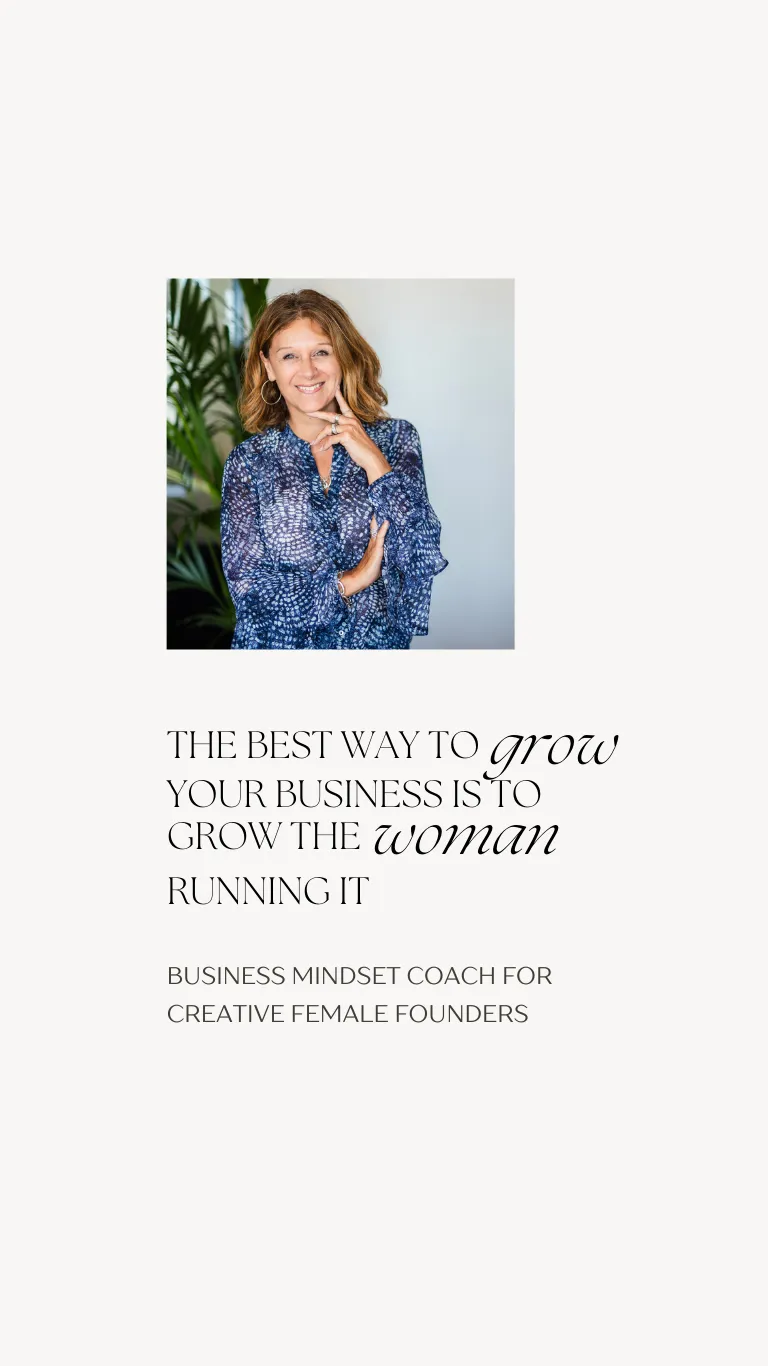
Welcome to Become HER Coaching
WHERE I SPECIALISE IN EMPOWERING CREATIVE
FEMALE BUSINESS OWNERS AND LEADERS
To embrace their individuality as a source of confidence and achieve the heights they dream of, without compromising or sacrificing their health, relationships and private lives.
ARE YOU READY TO BECOME HER? LET'S GET STARTED


I'm a passionate advocate for women's
empowerment, growth, self care and individuality.
With a blend of personal experiences, coaching strategies and methodologies, and powerful tools, I help women turn their visions into reality.
I find immense joy in sharing the invaluable lessons I've learned throughout my journey leading a successful exhibition design agency for more than 25 years.
My coaching style is a fusion of creativity, strategy, and unwavering support, using a combination of CBT, NLP and EFT modalities and I use a unique psychometric assessment for resilience & wellbeing at work (Wraw).
I believe that within each of us lies the strength to tackle life's challenges and that we don't need to "have it all"; we just deserve to have what we truly desire.
Are you ready to Become HER, an entrepreneur who embodies authenticity, innovation and impact?
BECOME HER
BECOME HER
When you work through my signature programme you embark on a life changing journey of transformation as we get laser focus on your Vision, Mindset, Strategy, Power, and Balance. Together, we tackle common challenges such as confidence, clarity, imposter syndrome, procrastination, decision-making, work/life balance, money mindset and the pursuit of growth and visibility. You will discover the three key invisible barriers to your success and how to break through them.
Become HER is a journey where you collect and collate all your wisdom, experience and knowledge, embrace your unique individuality and let it be the source of your confidence so you are unstoppable in your beliefs and what you can achieve.
When you work through my signature programme you embark on a life changing journey of transformation: Vision, Mindset, Strategy, Power, and Balance. Together, we tackle common challenges such as confidence, clarity, imposter syndrome, procrastination, decision-making, and the pursuit of growth and visibility. You will discover the three key invisible barriers to your success and how to break through them.
Become HER is a journey where you collect and collate all your wisdom, experience and knowledge, embrace your unique individuality and let it be the source of your confidence so you are unstoppable in your beliefs and what you can achieve.
MY MISSION
MY MISSION
To create a tribe—a community where women feel seen, heard, visible, and supported for their uniqueness, passions, and individuality. I'm dedicated to providing a space where women business owners can find a sense of belonging while stepping away from societal expectations and to use my gifts of experience, learning and belief to amplify the self-worth and net-worth of my clients.
To create a tribe, a community where women feel seen, heard, visible, and supported for their uniqueness, passions, and individuality. I'm dedicated to providing a space where women business owners can find a sense of belonging while stepping away from societal expectations and to use my gifts of experience, learning and belief to amplify the self-worth and net-worth of my clients.
BELIEVE | CREATE | BECOME
1:1 Coaching
Become HER Membership
VIP Mindset & Strategy Days
Group Programmes
Workshops
Retreats

The Smarter Way to Think About Your Business
Browse articles on pricing, marketing, business strategy,
AI, productivity, mindset and growing a successful business.
The Smarter Way to Think About Your Business
Browse articles on pricing, marketing, business strategy,
AI, productivity, mindset and growing a successful business.
Practical business articles covering pricing, marketing, AI, sales, strategy and business growth for female business owners.
These articles come from the conversations that happen every week around pricing, clients, delivery models, time, and the role we play inside our own business.
If you are looking for a smarter way to run your business, you'll enoy these.
Practical business articles covering pricing, marketing, AI, sales, strategy and business growth for female business owners.
These articles come from the conversations that happen every week around pricing, clients, delivery models, time, and the role we play inside our own business.
If you are looking for a smarter way to run your business, you'll enoy these.

Preparing Your Agency for Succession or Sale
At some point, most MDs and founders start thinking about this, even if they're years away from acting on it. A merger you might want to make. An exit you're quietly considering. A successor you're hoping to hand things to eventually. Retirement that's no longer entirely theoretical.
Whatever the specific version, the question underneath it is usually the same: what would actually happen to this business if I stepped back?
Most MDs, asked honestly, don't love the answer.
The number that changes everything
Buyers, investors and successors are not primarily valuing your client list, your creative reputation, or even last year's revenue. They're valuing one thing above almost everything else: what happens to performance when the founder is no longer in the room.
A business that only runs well because you're in it is not a scalable asset. It's a well-run job wearing the appearance of a company. The two can look identical from the outside — similar revenue, similar client roster, similar team size right up until someone tries to price the difference between them. That difference shows up directly in valuation multiples, in due diligence findings, and in how long a successor lasts before either leaving or quietly reverting to how you used to run things.
What due diligence actually looks for
Anyone seriously evaluating an agency for acquisition, merger or succession will look past the numbers into the leadership structure underneath them. Specifically:
Does decision-making genuinely happen below the founder, or does everything still travel upward? Do client relationships sit with the agency, or with one person? Is there a shared standard the senior team holds consistently, or does quality depend on who's paying attention that week? Would revenue and delivery survive a six-month absence from the top?
Weak answers to these questions don't necessarily kill a deal. But they depress the price, extend the earn-out, or load the transition with conditions that make the whole thing harder to live through.
Why this takes longer to fix than people expect
The leadership infrastructure that makes an agency saleable or succession-ready isn't built quickly, and it can't be built in the final six months before a transaction. It requires a senior team that has been operating with real authority, real accountability and a shared standard for long enough that it's become how the business actually runs, not a temporary arrangement dressed up for a data room.
This is why the work has to start well before any conversation with a buyer, an investor, or a successor. The agencies that come through due diligence well are the ones where this was already true, not the ones scrambling to demonstrate it in the months before completion.
Where this connects to the framework
This is Reduced Enterprise Value in practice one of the direct consequences of Below the Line Leadership Patterns, and the reason succession and exit readiness are leadership questions long before they're financial ones. The relevant shift is Become Resilient an agency that keeps performing and adapting as a leadership team, not one that depends on a single person absorbing every difficulty.
Where to start
If you're beginning to think seriously about succession, sale, merger, or simply reducing how much the business depends on you personally, Private Coaching is usually the right starting point it's built around exactly this kind of transition, for MDs and founders navigating a merger, acquisition, restructure, or new leadership appointment.
Our white paper goes into more depth on the research behind this including what the data actually shows about leadership maturity and enterprise value in agency businesses.
Book a discovery call if you want to talk through where your agency genuinely stands on this before any transaction is on the table.
Suzy Malhotra is the founder of The Leadership Line, leadership coaching and consultancy for MDs and founders of creative, events, experiential, production and exhibition agencies. She co-founded and ran 4D Design for nearly 30 years, an exhibition and events agency delivering global brand projects. She knows this industry from the inside. Her work builds the leadership layer agencies need to grow without the MD being the bottleneck.

Preparing Your Agency for Succession or Sale
At some point, most MDs and founders start thinking about this, even if they're years away from acting on it. A merger you might want to make. An exit you're quietly considering. A successor you're hoping to hand things to eventually. Retirement that's no longer entirely theoretical.
Whatever the specific version, the question underneath it is usually the same: what would actually happen to this business if I stepped back?
Most MDs, asked honestly, don't love the answer.
The number that changes everything
Buyers, investors and successors are not primarily valuing your client list, your creative reputation, or even last year's revenue. They're valuing one thing above almost everything else: what happens to performance when the founder is no longer in the room.
A business that only runs well because you're in it is not a scalable asset. It's a well-run job wearing the appearance of a company. The two can look identical from the outside — similar revenue, similar client roster, similar team size right up until someone tries to price the difference between them. That difference shows up directly in valuation multiples, in due diligence findings, and in how long a successor lasts before either leaving or quietly reverting to how you used to run things.
What due diligence actually looks for
Anyone seriously evaluating an agency for acquisition, merger or succession will look past the numbers into the leadership structure underneath them. Specifically:
Does decision-making genuinely happen below the founder, or does everything still travel upward? Do client relationships sit with the agency, or with one person? Is there a shared standard the senior team holds consistently, or does quality depend on who's paying attention that week? Would revenue and delivery survive a six-month absence from the top?
Weak answers to these questions don't necessarily kill a deal. But they depress the price, extend the earn-out, or load the transition with conditions that make the whole thing harder to live through.
Why this takes longer to fix than people expect
The leadership infrastructure that makes an agency saleable or succession-ready isn't built quickly, and it can't be built in the final six months before a transaction. It requires a senior team that has been operating with real authority, real accountability and a shared standard for long enough that it's become how the business actually runs, not a temporary arrangement dressed up for a data room.
This is why the work has to start well before any conversation with a buyer, an investor, or a successor. The agencies that come through due diligence well are the ones where this was already true, not the ones scrambling to demonstrate it in the months before completion.
Where this connects to the framework
This is Reduced Enterprise Value in practice one of the direct consequences of Below the Line Leadership Patterns, and the reason succession and exit readiness are leadership questions long before they're financial ones. The relevant shift is Become Resilient an agency that keeps performing and adapting as a leadership team, not one that depends on a single person absorbing every difficulty.
Where to start
If you're beginning to think seriously about succession, sale, merger, or simply reducing how much the business depends on you personally, Private Coaching is usually the right starting point it's built around exactly this kind of transition, for MDs and founders navigating a merger, acquisition, restructure, or new leadership appointment.
Our white paper goes into more depth on the research behind this including what the data actually shows about leadership maturity and enterprise value in agency businesses.
Book a discovery call if you want to talk through where your agency genuinely stands on this before any transaction is on the table.
Suzy Malhotra is the founder of The Leadership Line, leadership coaching and consultancy for MDs and founders of creative, events, experiential, production and exhibition agencies. She co-founded and ran 4D Design for nearly 30 years, an exhibition and events agency delivering global brand projects. She knows this industry from the inside. Her work builds the leadership layer agencies need to grow without the MD being the bottleneck.

"Suzy is an intelligent woman who thrives on seeing others succeed. Her creativity and passion for others shines through. She has so much to offer women of all ages and her excitement at helping others succeed is contagious. She perfectly balances the role of coach and friend. Xx"
Carla Cortesi, Animal Assisted Therapist

LET'S WORK TOGETHER
Suzy Malhotra is a business coach, mentor and business strategist helping female business owners, specialising in wellness professionals, build profitable, sustainable businesses. Combining more than 30 years of commercial experience with coaching and mentoring, she helps women create businesses that are both successful and fulfilling.
Based in Henley, Oxfordshire.
Helping Women in Business Worldwide
NEWSLETTER SIGN UP
SIgn-up for free monthly insights and learnings about launching, growing and building your business.

