Life Coaching for Smart Women at a Crossroads
About Suzy and her
Mission for you to
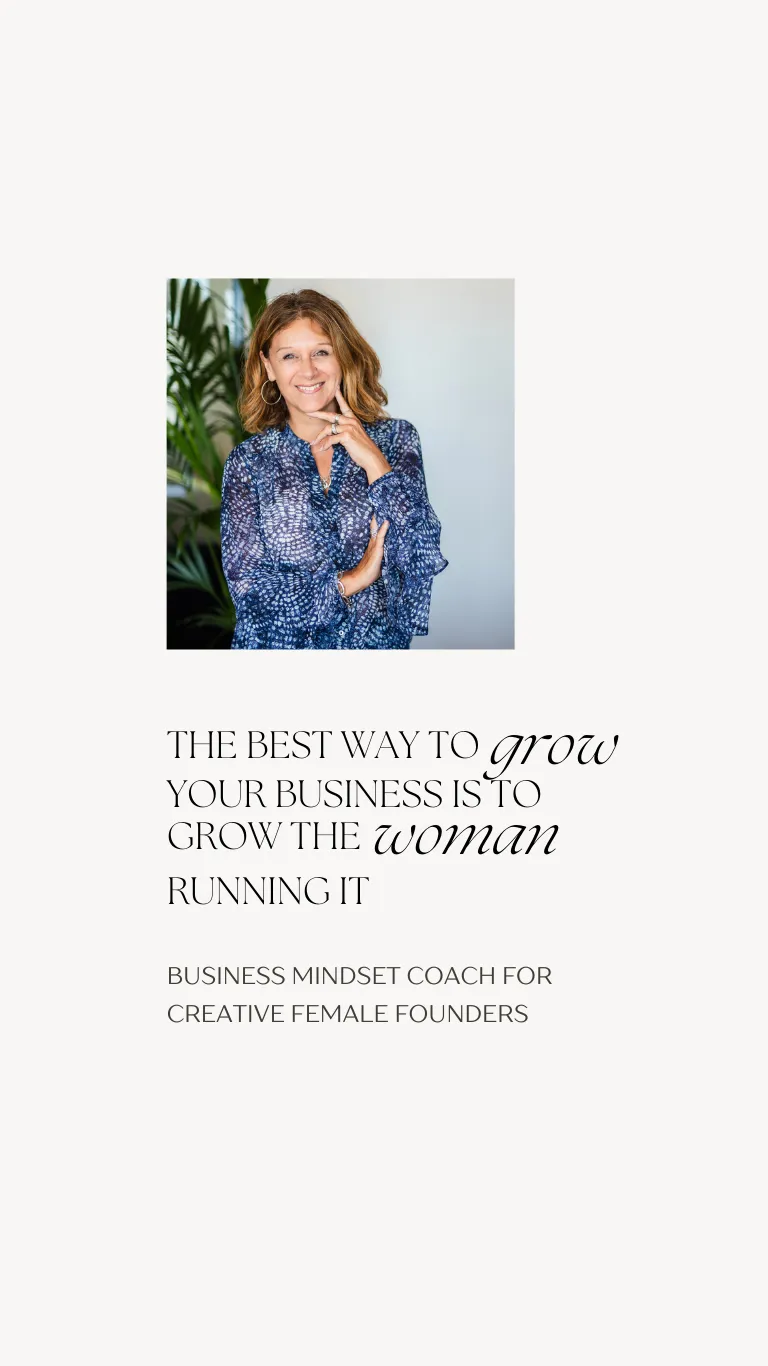
Business & Mindset Coach for
Creative Female Entrepreneurs
Helping you grow an incredible business by
growing the amazing women running it.
Welcome to Become HER Coaching
WHERE I SPECIALISE IN EMPOWERING CREATIVE
FEMALE BUSINESS OWNERS AND LEADERS
To embrace their individuality as a source of confidence and achieve the heights they dream of, without compromising or sacrificing their health, relationships and private lives.
ARE YOU READY TO BECOME HER? LET'S GET STARTED


I'm a passionate advocate for women's
empowerment, growth, self care and individuality.
With a blend of personal experiences, coaching strategies and methodologies, and powerful tools, I help women turn their visions into reality.
I find immense joy in sharing the invaluable lessons I've learned throughout my journey leading a successful exhibition design agency for more than 25 years.
My coaching style is a fusion of creativity, strategy, and unwavering support, using a combination of CBT, NLP and EFT modalities and I use a unique psychometric assessment for resilience & wellbeing at work (Wraw).
I believe that within each of us lies the strength to tackle life's challenges and that we don't need to "have it all"; we just deserve to have what we truly desire.
Are you ready to Become HER, an entrepreneur who embodies authenticity, innovation and impact?
BECOME HER
BECOME HER
When you work through my signature programme you embark on a life changing journey of transformation as we get laser focus on your Vision, Mindset, Strategy, Power, and Balance. Together, we tackle common challenges such as confidence, clarity, imposter syndrome, procrastination, decision-making, work/life balance, money mindset and the pursuit of growth and visibility. You will discover the three key invisible barriers to your success and how to break through them.
Become HER is a journey where you collect and collate all your wisdom, experience and knowledge, embrace your unique individuality and let it be the source of your confidence so you are unstoppable in your beliefs and what you can achieve.
When you work through my signature programme you embark on a life changing journey of transformation: Vision, Mindset, Strategy, Power, and Balance. Together, we tackle common challenges such as confidence, clarity, imposter syndrome, procrastination, decision-making, and the pursuit of growth and visibility. You will discover the three key invisible barriers to your success and how to break through them.
Become HER is a journey where you collect and collate all your wisdom, experience and knowledge, embrace your unique individuality and let it be the source of your confidence so you are unstoppable in your beliefs and what you can achieve.
MY MISSION
MY MISSION
To create a tribe—a community where women feel seen, heard, visible, and supported for their uniqueness, passions, and individuality. I'm dedicated to providing a space where women business owners can find a sense of belonging while stepping away from societal expectations and to use my gifts of experience, learning and belief to amplify the self-worth and net-worth of my clients.
To create a tribe, a community where women feel seen, heard, visible, and supported for their uniqueness, passions, and individuality. I'm dedicated to providing a space where women business owners can find a sense of belonging while stepping away from societal expectations and to use my gifts of experience, learning and belief to amplify the self-worth and net-worth of my clients.
BELIEVE | CREATE | BECOME
1:1 Coaching
Become HER Membership
VIP Mindset & Strategy Days
Group Programmes
Workshops
Retreats

The Smarter Way to Think About Your Business
Browse articles on pricing, marketing, business strategy,
AI, productivity, mindset and growing a successful business.
The Smarter Way to Think About Your Business
Browse articles on pricing, marketing, business strategy,
AI, productivity, mindset and growing a successful business.
Practical business articles covering pricing, marketing, AI, sales, strategy and business growth for female business owners.
These articles come from the conversations that happen every week around pricing, clients, delivery models, time, and the role we play inside our own business.
If you are looking for a smarter way to run your business, you'll enoy these.

How Agency Leaders Can Lead Gen Z and Millennial Teams
Leading people who see work differently
I was reading Deloitte's latest survey of Gen Z and millennials recently, and one pair of numbers stayed with me. In the UK, 84% of Gen Z and 73% of millennials say they're interested in moving into leadership at some point. Only 5% and 3% name it as their main career goal.
The short answer, then, is that younger people in agencies do still want to lead. What many of them don't want is the version of leadership they've been watching from close range. I think the most useful response from those of us who built careers in this industry is to look honestly at what that version involves, rather than at what might be wrong with the next generation.
What's putting them off?
Deloitte asked people around the world who weren't prioritising leadership what was holding them back. Half of Gen Z pointed to stress and burnout, and the same proportion to excessive responsibility. Back in the UK, work-life balance was the most common career goal for both generations.
Our own corner of the world has been saying something similar. In a Meetings Industry Association survey, nine in ten events professionals said work-life balance expectations were damaging staff retention, and 53% had seen burnout, stress or wellbeing issues increase over the past year. Research from Birmingham City University found younger workers still passionate about live events, but less willing to accept long hours, extensive travel and job insecurity as the price of being involved.
That is a long way from "they don't want to work". They want the work. They are asking what it's going to cost them.
Something I often talk about with the leaders I work with is that many younger people grew up watching their parents work long hours, come home exhausted and miss things like sports days and school plays. They've seen what that kind of success can cost. I went back to work six weeks after having my son Thomas, not because I was desperate to get back to my desk but because that was how we had built the business. At the time I thought that was simply part of being a founder. I see it rather differently now.
Why this is hard for leaders who came up the other way
I remember when working late and being the last person off an exhibition build were almost badges of honour. It's how many of us built our careers, and often how we earned the next promotion. So when somebody asks about progression in their first year, or is clear about when they'll be offline, it can land as a lack of commitment, because commitment in our day looked like still being there.
That tension is real. In the same Meetings Industry Association survey, 55% reported workplace conflicts due to generational differences, and when people were asked what would help keep staff, more management training came second only to flexibility.
What I find interesting is that many of the experienced leaders I speak to aren't resistant to any of this. They're just not always sure how to respond. Many were promoted because they were brilliant at their jobs, not because anyone had taught them how to lead people, and now they're expected to lead people whose expectations of work can be quite different from their own.
Have we confused commitment with endurance?
Agencies have a habit of measuring commitment in hours, largely because hours are easy to see. They tell you very little about whether someone's judgement is improving or whether they can handle a difficult client without help.
I'd separate standards from endurance. Standards are about the quality of the work and how we treat clients and each other. Endurance is how long you're prepared to go without sleep to meet them. For years we've allowed one to stand in for the other, and I think it's the second that younger people are questioning far more than the first.
I'm not suggesting the show won't open on Tuesday. Events and exhibitions have deadlines that nobody can move, there will be late nights on a build, and anyone joining this industry ought to know that. But there is a real difference between a crunch everybody can see coming and a business that runs on goodwill because it has never had to work out a better way.
What are they actually asking for?
Deloitte also asked what would make people more interested in leadership, globally. Higher pay came first, with flexible working next. Then, for 36% of Gen Z and 35% of millennials, came a clearer understanding of the path to leadership in their organisation.
That last one should interest agency leaders, because it costs very little. In many agencies, the route from account manager to director is something people work out by watching who got promoted.
I'm seeing a version of this in an agency I work with at the moment. The leaders there are getting frustrated because career progression comes up at every single one-to-one. I understand that, because it's wearing to be asked the same question every time you sit down with someone. But I'd want to know what the repetition is telling us. If someone raises it at every meeting, it may be that nobody has yet given them an answer they can hold on to.
The same report found that many respondents want managers to help set boundaries and support work-life balance, while only up to a quarter consistently see those behaviours in practice. As far as I can tell, this is less about wanting an easier time and more about wanting to know what good looks like, and to see someone doing it without falling apart.
What should agency leaders do differently?
I don't think we need to abandon the standards, commitment or work ethic that helped build our agencies. I'd start somewhere more practical.
Say what good looks like at each level. If the answer depends on years served or hours put in, it isn't yet an answer.
Make the route visible. Tell people what the next role asks of them, and what you'd need to see.
Plan the crunch, and plan the recovery. A hard week on a build lands very differently when people knew it was coming and know what happens afterwards.
Look at what your senior people are modelling. If your head of department answers emails from the beach, that is the job description, whatever the careers page says.
Check how your feedback is landing. Words that worked perfectly well in 2005 can be heard very differently today, and a quick conversation at the time will tell you more than an annual review.
There's more on the practical side of handing work over so people can progress in a separate piece.
None of this is really a generational question, and I'm wary of talking about millions of people as though they were one person. Plenty of 45-year-olds want exactly the same things and have simply stopped saying so. But it does matter more when you're under pressure. It's very easy, at eleven o'clock at night on a build, to lead the way you were led. Above the Line is about noticing that moment and choosing your response rather than running on habit, and I've come to think this is one of the places it matters most.
The people coming through our agencies are going to be running them. If they want to lead, and the numbers say that most of them do, then we ought to be making leadership something worth aspiring to.
If this is something you're working through with your own senior team, I'd be glad to talk about it. Book a conversation.

How Agency Leaders Can Lead Gen Z and Millennial Teams
Leading people who see work differently
I was reading Deloitte's latest survey of Gen Z and millennials recently, and one pair of numbers stayed with me. In the UK, 84% of Gen Z and 73% of millennials say they're interested in moving into leadership at some point. Only 5% and 3% name it as their main career goal.
The short answer, then, is that younger people in agencies do still want to lead. What many of them don't want is the version of leadership they've been watching from close range. I think the most useful response from those of us who built careers in this industry is to look honestly at what that version involves, rather than at what might be wrong with the next generation.
What's putting them off?
Deloitte asked people around the world who weren't prioritising leadership what was holding them back. Half of Gen Z pointed to stress and burnout, and the same proportion to excessive responsibility. Back in the UK, work-life balance was the most common career goal for both generations.
Our own corner of the world has been saying something similar. In a Meetings Industry Association survey, nine in ten events professionals said work-life balance expectations were damaging staff retention, and 53% had seen burnout, stress or wellbeing issues increase over the past year. Research from Birmingham City University found younger workers still passionate about live events, but less willing to accept long hours, extensive travel and job insecurity as the price of being involved.
That is a long way from "they don't want to work". They want the work. They are asking what it's going to cost them.
Something I often talk about with the leaders I work with is that many younger people grew up watching their parents work long hours, come home exhausted and miss things like sports days and school plays. They've seen what that kind of success can cost. I went back to work six weeks after having my son Thomas, not because I was desperate to get back to my desk but because that was how we had built the business. At the time I thought that was simply part of being a founder. I see it rather differently now.
Why this is hard for leaders who came up the other way
I remember when working late and being the last person off an exhibition build were almost badges of honour. It's how many of us built our careers, and often how we earned the next promotion. So when somebody asks about progression in their first year, or is clear about when they'll be offline, it can land as a lack of commitment, because commitment in our day looked like still being there.
That tension is real. In the same Meetings Industry Association survey, 55% reported workplace conflicts due to generational differences, and when people were asked what would help keep staff, more management training came second only to flexibility.
What I find interesting is that many of the experienced leaders I speak to aren't resistant to any of this. They're just not always sure how to respond. Many were promoted because they were brilliant at their jobs, not because anyone had taught them how to lead people, and now they're expected to lead people whose expectations of work can be quite different from their own.
Have we confused commitment with endurance?
Agencies have a habit of measuring commitment in hours, largely because hours are easy to see. They tell you very little about whether someone's judgement is improving or whether they can handle a difficult client without help.
I'd separate standards from endurance. Standards are about the quality of the work and how we treat clients and each other. Endurance is how long you're prepared to go without sleep to meet them. For years we've allowed one to stand in for the other, and I think it's the second that younger people are questioning far more than the first.
I'm not suggesting the show won't open on Tuesday. Events and exhibitions have deadlines that nobody can move, there will be late nights on a build, and anyone joining this industry ought to know that. But there is a real difference between a crunch everybody can see coming and a business that runs on goodwill because it has never had to work out a better way.
What are they actually asking for?
Deloitte also asked what would make people more interested in leadership, globally. Higher pay came first, with flexible working next. Then, for 36% of Gen Z and 35% of millennials, came a clearer understanding of the path to leadership in their organisation.
That last one should interest agency leaders, because it costs very little. In many agencies, the route from account manager to director is something people work out by watching who got promoted.
I'm seeing a version of this in an agency I work with at the moment. The leaders there are getting frustrated because career progression comes up at every single one-to-one. I understand that, because it's wearing to be asked the same question every time you sit down with someone. But I'd want to know what the repetition is telling us. If someone raises it at every meeting, it may be that nobody has yet given them an answer they can hold on to.
The same report found that many respondents want managers to help set boundaries and support work-life balance, while only up to a quarter consistently see those behaviours in practice. As far as I can tell, this is less about wanting an easier time and more about wanting to know what good looks like, and to see someone doing it without falling apart.
What should agency leaders do differently?
I don't think we need to abandon the standards, commitment or work ethic that helped build our agencies. I'd start somewhere more practical.
Say what good looks like at each level. If the answer depends on years served or hours put in, it isn't yet an answer.
Make the route visible. Tell people what the next role asks of them, and what you'd need to see.
Plan the crunch, and plan the recovery. A hard week on a build lands very differently when people knew it was coming and know what happens afterwards.
Look at what your senior people are modelling. If your head of department answers emails from the beach, that is the job description, whatever the careers page says.
Check how your feedback is landing. Words that worked perfectly well in 2005 can be heard very differently today, and a quick conversation at the time will tell you more than an annual review.
There's more on the practical side of handing work over so people can progress in a separate piece.
None of this is really a generational question, and I'm wary of talking about millions of people as though they were one person. Plenty of 45-year-olds want exactly the same things and have simply stopped saying so. But it does matter more when you're under pressure. It's very easy, at eleven o'clock at night on a build, to lead the way you were led. Above the Line is about noticing that moment and choosing your response rather than running on habit, and I've come to think this is one of the places it matters most.
The people coming through our agencies are going to be running them. If they want to lead, and the numbers say that most of them do, then we ought to be making leadership something worth aspiring to.
If this is something you're working through with your own senior team, I'd be glad to talk about it. Book a conversation.
"Suzy is an intelligent woman who thrives on seeing others succeed. Her creativity and passion for others shines through. She has so much to offer women of all ages and her excitement at helping others succeed is contagious. She perfectly balances the role of coach and friend. Xx"
Carla Cortesi, Animal Assisted Therapist

LET'S WORK TOGETHER
Suzy Malhotra is a business coach, mentor and business strategist helping female business owners, specialising in wellness professionals, build profitable, sustainable businesses. Combining more than 30 years of commercial experience with coaching and mentoring, she helps women create businesses that are both successful and fulfilling.
Based in Henley, Oxfordshire.
Helping Women in Business Worldwide
NEWSLETTER SIGN UP
SIgn-up for free monthly insights and learnings about launching, growing and building your business.

