Life Coaching for Smart Women at a Crossroads
About Suzy and her
Mission for you to

Business & Mindset Coach for
Creative Female Entrepreneurs
Helping you grow an incredible business by
growing the amazing women running it.

Welcome to Become HER Coaching
WHERE I SPECIALISE IN EMPOWERING CREATIVE
FEMALE BUSINESS OWNERS AND LEADERS
To embrace their individuality as a source of confidence and achieve the heights they dream of, without compromising or sacrificing their health, relationships and private lives.
ARE YOU READY TO BECOME HER? LET'S GET STARTED


I'm a passionate advocate for women's
empowerment, growth, self care and individuality.
With a blend of personal experiences, coaching strategies and methodologies, and powerful tools, I help women turn their visions into reality.
I find immense joy in sharing the invaluable lessons I've learned throughout my journey leading a successful exhibition design agency for more than 25 years.
My coaching style is a fusion of creativity, strategy, and unwavering support, using a combination of CBT, NLP and EFT modalities and I use a unique psychometric assessment for resilience & wellbeing at work (Wraw).
I believe that within each of us lies the strength to tackle life's challenges and that we don't need to "have it all"; we just deserve to have what we truly desire.
Are you ready to Become HER, an entrepreneur who embodies authenticity, innovation and impact?
BECOME HER
BECOME HER
When you work through my signature programme you embark on a life changing journey of transformation as we get laser focus on your Vision, Mindset, Strategy, Power, and Balance. Together, we tackle common challenges such as confidence, clarity, imposter syndrome, procrastination, decision-making, work/life balance, money mindset and the pursuit of growth and visibility. You will discover the three key invisible barriers to your success and how to break through them.
Become HER is a journey where you collect and collate all your wisdom, experience and knowledge, embrace your unique individuality and let it be the source of your confidence so you are unstoppable in your beliefs and what you can achieve.
When you work through my signature programme you embark on a life changing journey of transformation: Vision, Mindset, Strategy, Power, and Balance. Together, we tackle common challenges such as confidence, clarity, imposter syndrome, procrastination, decision-making, and the pursuit of growth and visibility. You will discover the three key invisible barriers to your success and how to break through them.
Become HER is a journey where you collect and collate all your wisdom, experience and knowledge, embrace your unique individuality and let it be the source of your confidence so you are unstoppable in your beliefs and what you can achieve.
MY MISSION
MY MISSION
To create a tribe—a community where women feel seen, heard, visible, and supported for their uniqueness, passions, and individuality. I'm dedicated to providing a space where women business owners can find a sense of belonging while stepping away from societal expectations and to use my gifts of experience, learning and belief to amplify the self-worth and net-worth of my clients.
To create a tribe, a community where women feel seen, heard, visible, and supported for their uniqueness, passions, and individuality. I'm dedicated to providing a space where women business owners can find a sense of belonging while stepping away from societal expectations and to use my gifts of experience, learning and belief to amplify the self-worth and net-worth of my clients.
BELIEVE | CREATE | BECOME
1:1 Coaching
Become HER Membership
VIP Mindset & Strategy Days
Group Programmes
Workshops
Retreats

The Smarter Way to Think About Your Business
Welcome to
My Blog Page
A collection of straight-talking pieces for women running real businesses.
Practical thinking. Useful perspective.
These articles come from the conversations that happen every week around pricing, clients, delivery models, time, and the role we play inside our own business.
If you are looking for a smarter way to run your business, you'll enoy these.
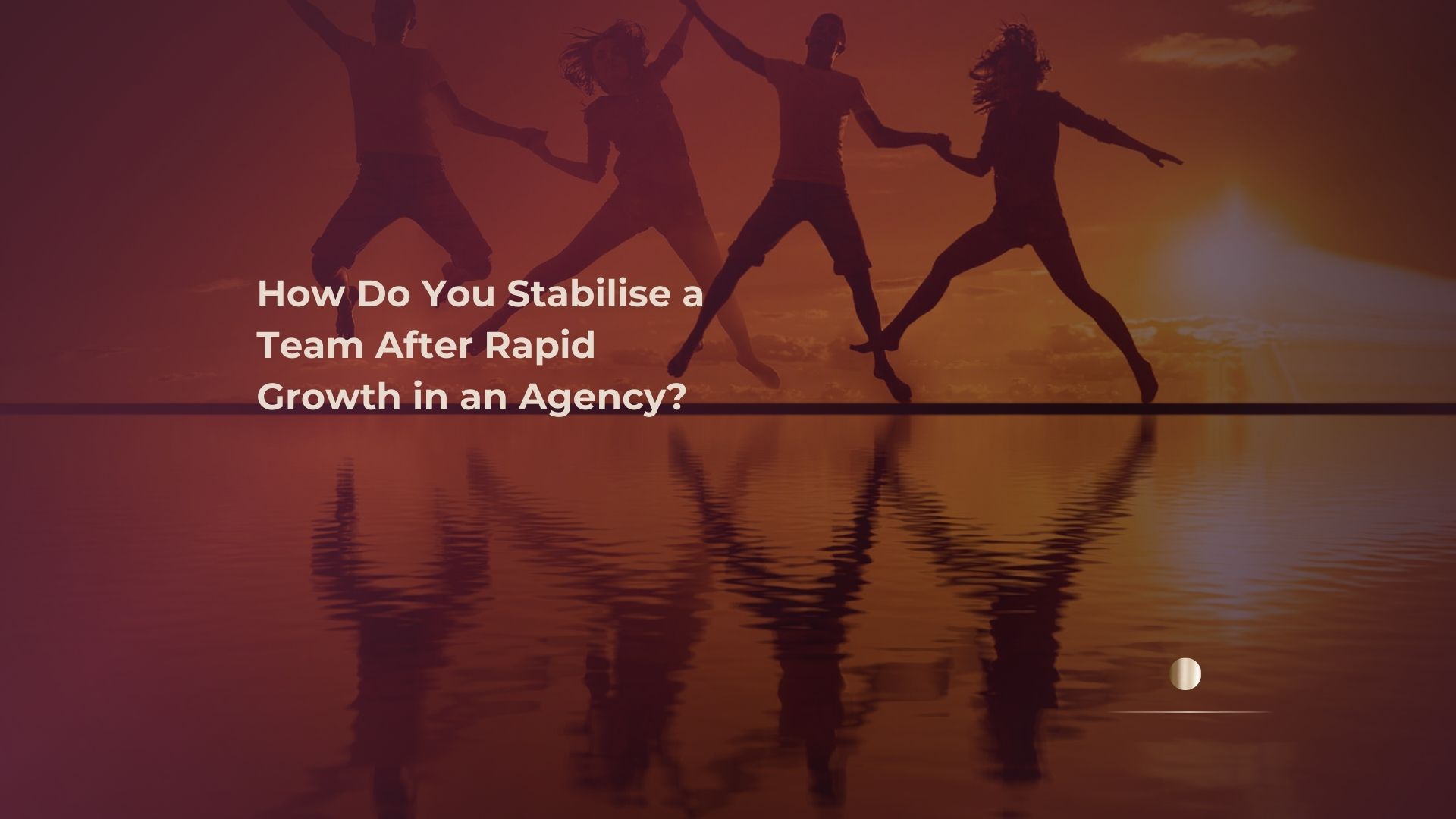
How Do You Stabilise a Team After Rapid Growth in an Agency?
How Do You Stabilise a Team After Rapid Growth in an Agency?
A behavioural and commercial blueprint for regaining steadiness at speed.
Rapid growth is one of those seductive agency milestones that looks perfect from the outside.
New clients.
New revenue.
New hires.
New energy.
But inside the team?
It rarely feels like momentum.
It feels like turbulence.
Expectations shift faster than people can absorb.
Roles blur.
Processes lag behind reality.
Leaders get stretched thin.
The emotional climate becomes reactive instead of steady.
It’s usually around this point that agencies come to me with a familiar question:
“How do we stabilise everything without slowing down?”
Here’s the truth: stabilisation isn’t about reducing pace. It’s about increasing clarity.
And it always starts in one place.
1. Reset the Leadership Line First
When a team feels unsettled, most agencies look straight to operations, to processes, SOPs, templates, workflows.
But stabilisation doesn’t start in operations.
It starts in behaviour.
Teams copy leadership behaviour more faithfully than any documented process.
If leaders are:
rushing
rescuing
skipping clarity
absorbing pressure
blurring boundaries
stepping into work that isn’t theirs
…then the team becomes a mirror of that behaviour.
Stability is a behavioural pattern before it’s an operational one.
(A 2020 MIT Sloan study found that teams operating under “calm, predictable leadership behaviour” outperformed reactive teams by up to 30% on delivery reliability evidence that steadiness is a commercial advantage.)
When leaders move above the line steady, clear, boundaried, regulated the team recalibrates around them.
2. Re-Clarify Roles and Altitudes
During high growth, everyone has been “helping out.”
It’s a survival response, not a strategy.
What starts as supportive becomes chaotic when the business scales.
To stabilise a team, you need:
renewed role clarity
renewed decision altitudes
renewed ownership areas
renewed escalation points
Ambiguity is one of the fastest ways to destabilise high-performing teams.
Clarity is one of the fastest ways to restore them.
Role clarity reduces friction.
Altitude clarity reduces rework.
Ownership clarity reduces emotional load.
When everyone knows precisely where they should operate and where they shouldn’t the team steadies quickly.
3. Establish Feedback Hygiene
Rapid growth exposes gaps. When those gaps aren’t addressed, instability grows underneath the surface.
Destabilisation accelerates when:
feedback is inconsistent
standards aren’t reinforced
issues are raised too late
expectations shift without explanation
Teams stabilise when feedback becomes:
predictable
timely
clear
low-drama
rhythmical
Feedback hygiene isn’t about criticism.
It’s about alignment.
It gives people a sense of orientation when everything else feels in motion.
4. Tighten Boundaries — Calmly and Commercially
Growth expands scope.
Scope expands pressure.
Pressure expands chaos unless boundaries expand with it.
Stabilisation requires:
clearer client boundaries
clearer internal boundaries
clearer capacity limits
clearer “this is in / this is out” rules
Boundaries aren’t restrictive.
They’re stabilising.
A 2019 Deloitte report on team resilience showed that teams with strong boundary clarity experienced 60% fewer delivery bottlenecks.
Not because they worked harder because they worked cleaner.
Boundaries protect:
decision quality
emotional steadiness
delivery capacity
commercial performance
They’re not personal preferences — they are operational infrastructure.
5. Strengthen the Emotional Climate
Growth elevates pressure.
Pressure elevates emotion.
Emotion spreads.
Teams stabilise when leaders model what steadiness looks like under load:
regulating before responding
naming reality without panic
bringing clarity instead of intensity
staying at altitude instead of dropping into chaos
Emotional steadiness isn’t soft.
It’s a commercial strategy.
Steady leaders create steady rooms.
Steady rooms create better decisions.
Better decisions create cleaner delivery.
6. Redesign Operating Rhythms
The rhythms that worked at 15 people rarely work at 40.
The rhythms that worked at £500k rarely work at £1.5m.
Most agencies try to patch old processes instead of building new ones that match the new scale.
Stabilisation requires new:
leadership rhythms
delivery rhythms
communication rhythms
decision-making rhythms
Rhythm is the antidote to chaos.
It gives the team a predictable pattern to lean on when the business expands faster than their nervous systems can.
Final Thought
Rapid growth doesn’t break a team.
Unstructured growth does.
Teams stabilise when leadership becomes clearer, boundaries become stronger and behaviours move consistently above the line.
Stability isn’t a pause in momentum it’s what allows sustainable momentum in the first place.
If your agency has grown fast and the team feels stretched, unsettled or reactive, let’s talk about stabilising the leadership line.
Message me ABOVE THE LINE and we’ll start there.
Read about Team Resilience here: https://leadershipline.co.uk/post/resilience-above-the-line

How Do You Stabilise a Team After Rapid Growth in an Agency?
How Do You Stabilise a Team After Rapid Growth in an Agency?
A behavioural and commercial blueprint for regaining steadiness at speed.
Rapid growth is one of those seductive agency milestones that looks perfect from the outside.
New clients.
New revenue.
New hires.
New energy.
But inside the team?
It rarely feels like momentum.
It feels like turbulence.
Expectations shift faster than people can absorb.
Roles blur.
Processes lag behind reality.
Leaders get stretched thin.
The emotional climate becomes reactive instead of steady.
It’s usually around this point that agencies come to me with a familiar question:
“How do we stabilise everything without slowing down?”
Here’s the truth: stabilisation isn’t about reducing pace. It’s about increasing clarity.
And it always starts in one place.
1. Reset the Leadership Line First
When a team feels unsettled, most agencies look straight to operations, to processes, SOPs, templates, workflows.
But stabilisation doesn’t start in operations.
It starts in behaviour.
Teams copy leadership behaviour more faithfully than any documented process.
If leaders are:
rushing
rescuing
skipping clarity
absorbing pressure
blurring boundaries
stepping into work that isn’t theirs
…then the team becomes a mirror of that behaviour.
Stability is a behavioural pattern before it’s an operational one.
(A 2020 MIT Sloan study found that teams operating under “calm, predictable leadership behaviour” outperformed reactive teams by up to 30% on delivery reliability evidence that steadiness is a commercial advantage.)
When leaders move above the line steady, clear, boundaried, regulated the team recalibrates around them.
2. Re-Clarify Roles and Altitudes
During high growth, everyone has been “helping out.”
It’s a survival response, not a strategy.
What starts as supportive becomes chaotic when the business scales.
To stabilise a team, you need:
renewed role clarity
renewed decision altitudes
renewed ownership areas
renewed escalation points
Ambiguity is one of the fastest ways to destabilise high-performing teams.
Clarity is one of the fastest ways to restore them.
Role clarity reduces friction.
Altitude clarity reduces rework.
Ownership clarity reduces emotional load.
When everyone knows precisely where they should operate and where they shouldn’t the team steadies quickly.
3. Establish Feedback Hygiene
Rapid growth exposes gaps. When those gaps aren’t addressed, instability grows underneath the surface.
Destabilisation accelerates when:
feedback is inconsistent
standards aren’t reinforced
issues are raised too late
expectations shift without explanation
Teams stabilise when feedback becomes:
predictable
timely
clear
low-drama
rhythmical
Feedback hygiene isn’t about criticism.
It’s about alignment.
It gives people a sense of orientation when everything else feels in motion.
4. Tighten Boundaries — Calmly and Commercially
Growth expands scope.
Scope expands pressure.
Pressure expands chaos unless boundaries expand with it.
Stabilisation requires:
clearer client boundaries
clearer internal boundaries
clearer capacity limits
clearer “this is in / this is out” rules
Boundaries aren’t restrictive.
They’re stabilising.
A 2019 Deloitte report on team resilience showed that teams with strong boundary clarity experienced 60% fewer delivery bottlenecks.
Not because they worked harder because they worked cleaner.
Boundaries protect:
decision quality
emotional steadiness
delivery capacity
commercial performance
They’re not personal preferences — they are operational infrastructure.
5. Strengthen the Emotional Climate
Growth elevates pressure.
Pressure elevates emotion.
Emotion spreads.
Teams stabilise when leaders model what steadiness looks like under load:
regulating before responding
naming reality without panic
bringing clarity instead of intensity
staying at altitude instead of dropping into chaos
Emotional steadiness isn’t soft.
It’s a commercial strategy.
Steady leaders create steady rooms.
Steady rooms create better decisions.
Better decisions create cleaner delivery.
6. Redesign Operating Rhythms
The rhythms that worked at 15 people rarely work at 40.
The rhythms that worked at £500k rarely work at £1.5m.
Most agencies try to patch old processes instead of building new ones that match the new scale.
Stabilisation requires new:
leadership rhythms
delivery rhythms
communication rhythms
decision-making rhythms
Rhythm is the antidote to chaos.
It gives the team a predictable pattern to lean on when the business expands faster than their nervous systems can.
Final Thought
Rapid growth doesn’t break a team.
Unstructured growth does.
Teams stabilise when leadership becomes clearer, boundaries become stronger and behaviours move consistently above the line.
Stability isn’t a pause in momentum it’s what allows sustainable momentum in the first place.
If your agency has grown fast and the team feels stretched, unsettled or reactive, let’s talk about stabilising the leadership line.
Message me ABOVE THE LINE and we’ll start there.
Read about Team Resilience here: https://leadershipline.co.uk/post/resilience-above-the-line

"Suzy is an intelligent woman who thrives on seeing others succeed. Her creativity and passion for others shines through. She has so much to offer women of all ages and her excitement at helping others succeed is contagious. She perfectly balances the role of coach and friend. Xx"
Carla Cortesi, Animal Assisted Therapist

LET'S WORK TOGETHER
Based in Henley, Oxfordshire.
Helping Women in Business Worldwide
NEWSLETTER SIGN UP
SIgn-up for free monthly insights and learnings about launching, growing and building your business.

