Life Coaching for Smart Women at a Crossroads
About Suzy and her
Mission for you to

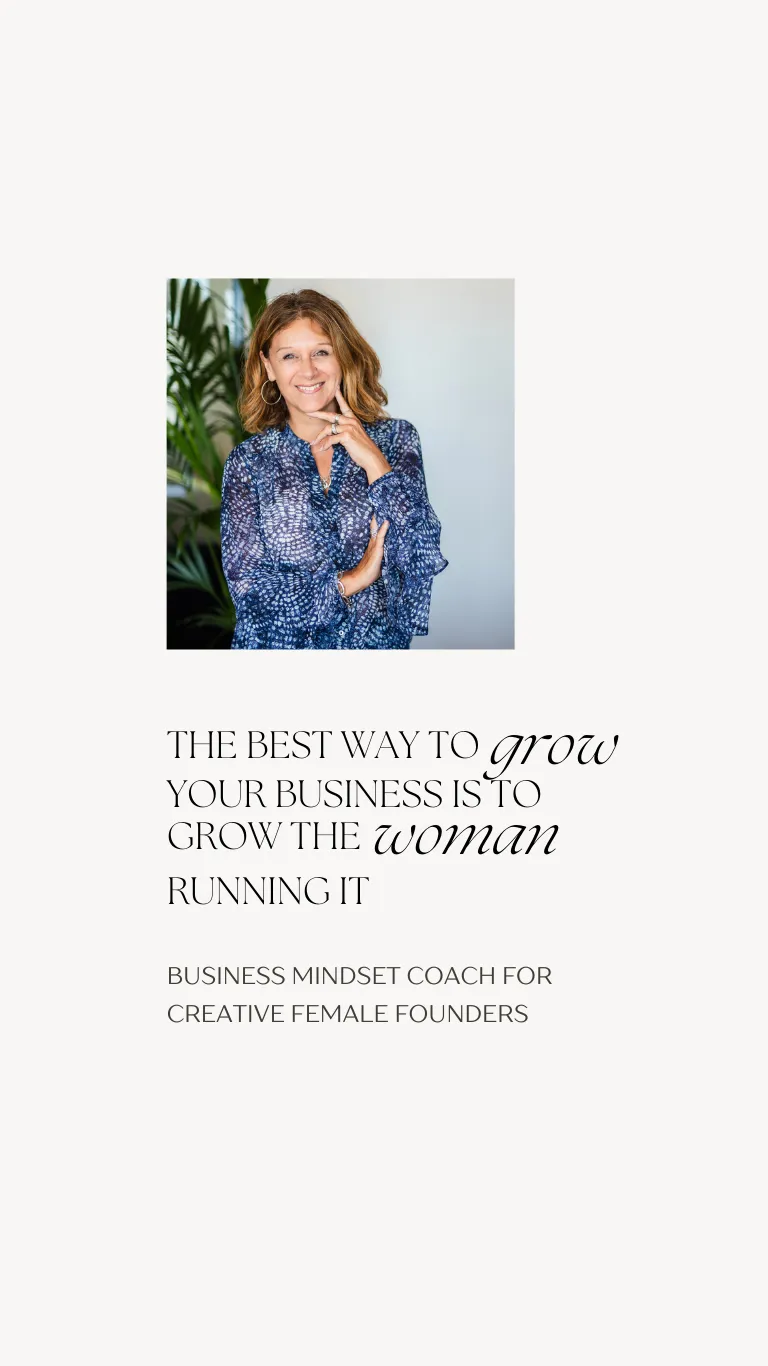
Business & Mindset Coach for
Creative Female Entrepreneurs
Helping you grow an incredible business by
growing the amazing women running it.
Welcome to Become HER Coaching
WHERE I SPECIALISE IN EMPOWERING CREATIVE
FEMALE BUSINESS OWNERS AND LEADERS
To embrace their individuality as a source of confidence and achieve the heights they dream of, without compromising or sacrificing their health, relationships and private lives.
ARE YOU READY TO BECOME HER? LET'S GET STARTED


I'm a passionate advocate for women's
empowerment, growth, self care and individuality.
With a blend of personal experiences, coaching strategies and methodologies, and powerful tools, I help women turn their visions into reality.
I find immense joy in sharing the invaluable lessons I've learned throughout my journey leading a successful exhibition design agency for more than 25 years.
My coaching style is a fusion of creativity, strategy, and unwavering support, using a combination of CBT, NLP and EFT modalities and I use a unique psychometric assessment for resilience & wellbeing at work (Wraw).
I believe that within each of us lies the strength to tackle life's challenges and that we don't need to "have it all"; we just deserve to have what we truly desire.
Are you ready to Become HER, an entrepreneur who embodies authenticity, innovation and impact?
BECOME HER
BECOME HER
When you work through my signature programme you embark on a life changing journey of transformation as we get laser focus on your Vision, Mindset, Strategy, Power, and Balance. Together, we tackle common challenges such as confidence, clarity, imposter syndrome, procrastination, decision-making, work/life balance, money mindset and the pursuit of growth and visibility. You will discover the three key invisible barriers to your success and how to break through them.
Become HER is a journey where you collect and collate all your wisdom, experience and knowledge, embrace your unique individuality and let it be the source of your confidence so you are unstoppable in your beliefs and what you can achieve.
When you work through my signature programme you embark on a life changing journey of transformation: Vision, Mindset, Strategy, Power, and Balance. Together, we tackle common challenges such as confidence, clarity, imposter syndrome, procrastination, decision-making, and the pursuit of growth and visibility. You will discover the three key invisible barriers to your success and how to break through them.
Become HER is a journey where you collect and collate all your wisdom, experience and knowledge, embrace your unique individuality and let it be the source of your confidence so you are unstoppable in your beliefs and what you can achieve.
MY MISSION
MY MISSION
To create a tribe—a community where women feel seen, heard, visible, and supported for their uniqueness, passions, and individuality. I'm dedicated to providing a space where women business owners can find a sense of belonging while stepping away from societal expectations and to use my gifts of experience, learning and belief to amplify the self-worth and net-worth of my clients.
To create a tribe, a community where women feel seen, heard, visible, and supported for their uniqueness, passions, and individuality. I'm dedicated to providing a space where women business owners can find a sense of belonging while stepping away from societal expectations and to use my gifts of experience, learning and belief to amplify the self-worth and net-worth of my clients.
BELIEVE | CREATE | BECOME
1:1 Coaching
Become HER Membership
VIP Mindset & Strategy Days
Group Programmes
Workshops
Retreats

The Smarter Way to Think About Your Business
Browse articles on pricing, marketing, business strategy,
AI, productivity, mindset and growing a successful business.
The Smarter Way to Think About Your Business
Browse articles on pricing, marketing, business strategy,
AI, productivity, mindset and growing a successful business.
Practical business articles covering pricing, marketing, AI, sales, strategy and business growth for female business owners.
These articles come from the conversations that happen every week around pricing, clients, delivery models, time, and the role we play inside our own business.
If you are looking for a smarter way to run your business, you'll enoy these.

Should I coach my MD or my whole leadership team?
Should I coach my MD or my whole leadership team?
The short answer: coach the MD on their own when the challenge sits mainly with them: their confidence in the role, the way they use their time, or a particular habit that keeps pulling them back into the detail. Work with the whole leadership team when the problem lives between people, in unclear decisions, overlapping roles or a team where everyone has stepped half up into a bigger job. Often the most effective answer is a combination. Either way, expect to see real change over months rather than weeks.
Start with where the problem actually sits
This is usually the first thing I'm asked by a founder or MD thinking about leadership support, and it's a good question. It's also hard to answer before understanding what is really going on.
A useful way in is to ask where the friction shows up. If the MD is stretched because they are still doing parts of their old job, avoiding a difficult conversation or finding it hard to say no, much of the work can happen one to one. If the friction appears in the spaces between people, such as decisions that bounce between two directors, handovers that keep going wrong, or three senior people who each assume someone else owns a problem, coaching one person won't fix it. The team needs to work on it together.
When coaching the MD makes most sense
One-to-one coaching works well when the MD is the main lever. That might be someone newly in the role, someone who has grown up through the agency and is learning to lead people who used to be their peers, or someone whose time is being consumed by things the business no longer needs from them.
A simple test is to look at the last two weeks of your MD's diary and inbox and ask how much of it is genuinely MD-level work. Some leaders now ask an AI tool to run that audit for them, and the answer can be uncomfortable. If most of the week is spent being the answer to everyone else's questions, the coaching has a clear place to start.
When the whole team needs to be involved
Team work makes sense when everyone has moved up a level but nobody has quite left their previous role behind. I see this often in agencies after a founder steps back or a business grows quickly. Each person is capable and well-intentioned, but together they create duplication, slow decisions and a queue of questions that keeps travelling upwards.
In that situation, working with the team gives everyone a shared language and a shared picture. It's much easier to agree who owns which decisions when you're all in the room.
Why a combination often works best
The approach I find most effective in many agencies starts with a working session for the leadership team. That builds the shared language and surfaces the patterns between people. Individual sessions follow, so each leader can work on their own part of the change in the context of their real week.
I use the Above the Line approach in both. It's a simple way of noticing when a leader is responding with intention and when pressure has pulled them into old habits, such as rescuing, checking upwards or taking decisions back. Because the line moves with the role, the same language works for the MD and for each director.
How long until you see a difference?
Understanding changes quickly. Behaviour takes longer, because new habits have to survive ordinary agency pressure: the client who changes their mind on a Thursday, the pitch that lands at the worst moment.
As a guide, I'd expect an individual to need at least six sessions spread over a few months. A team usually takes three to nine months for new habits to become normal. The early signs are small and observable. Fewer decisions arrive at the MD's desk, managers bring recommendations rather than questions, and the leadership team's diaries start to look different.
Over time, it is reasonable to look for movement in the measures the business already tracks, such as client retention, team satisfaction and profit. Leadership is never the only thing driving those numbers, but it shouldn't sit separately from them either.
Questions to ask any coach you're considering
• Do they understand agency life: clients, pitches, delivery pressure and margins?
• Will they look at the business around the person, not just the person?
• How will you both know whether it's working?
• Is there a chemistry call, so the people being coached can choose to work with them?
Frequently asked questions
Is it better to start with the MD and add the team later? It can be, especially if budget is limited or the MD is the clearest constraint. If the problem is mainly between people, though, starting with the team often saves time.
What does leadership coaching for an agency team cost? It depends on the number of people and the length of the work. I've written about leadership coaching costs separately.
Does the founder need to be involved? Usually in setting it up, because they often hold the context and the expectations. Once the work starts, the founder's role is mostly to back the decisions the team makes.
If this sounds familiar
If you're weighing up whether to support your MD, your leadership team or both, I'd be glad to talk it through. Get in touch.
Suzy Malhotra is the founder of The Leadership Line, which works with founders, MDs and senior teams in creative, events, experiential and exhibition agencies when responsibility needs to move. She co-founded and ran 4D Design, an exhibition and events agency, for nearly thirty years.

Should I coach my MD or my whole leadership team?
Should I coach my MD or my whole leadership team?
The short answer: coach the MD on their own when the challenge sits mainly with them: their confidence in the role, the way they use their time, or a particular habit that keeps pulling them back into the detail. Work with the whole leadership team when the problem lives between people, in unclear decisions, overlapping roles or a team where everyone has stepped half up into a bigger job. Often the most effective answer is a combination. Either way, expect to see real change over months rather than weeks.
Start with where the problem actually sits
This is usually the first thing I'm asked by a founder or MD thinking about leadership support, and it's a good question. It's also hard to answer before understanding what is really going on.
A useful way in is to ask where the friction shows up. If the MD is stretched because they are still doing parts of their old job, avoiding a difficult conversation or finding it hard to say no, much of the work can happen one to one. If the friction appears in the spaces between people, such as decisions that bounce between two directors, handovers that keep going wrong, or three senior people who each assume someone else owns a problem, coaching one person won't fix it. The team needs to work on it together.
When coaching the MD makes most sense
One-to-one coaching works well when the MD is the main lever. That might be someone newly in the role, someone who has grown up through the agency and is learning to lead people who used to be their peers, or someone whose time is being consumed by things the business no longer needs from them.
A simple test is to look at the last two weeks of your MD's diary and inbox and ask how much of it is genuinely MD-level work. Some leaders now ask an AI tool to run that audit for them, and the answer can be uncomfortable. If most of the week is spent being the answer to everyone else's questions, the coaching has a clear place to start.
When the whole team needs to be involved
Team work makes sense when everyone has moved up a level but nobody has quite left their previous role behind. I see this often in agencies after a founder steps back or a business grows quickly. Each person is capable and well-intentioned, but together they create duplication, slow decisions and a queue of questions that keeps travelling upwards.
In that situation, working with the team gives everyone a shared language and a shared picture. It's much easier to agree who owns which decisions when you're all in the room.
Why a combination often works best
The approach I find most effective in many agencies starts with a working session for the leadership team. That builds the shared language and surfaces the patterns between people. Individual sessions follow, so each leader can work on their own part of the change in the context of their real week.
I use the Above the Line approach in both. It's a simple way of noticing when a leader is responding with intention and when pressure has pulled them into old habits, such as rescuing, checking upwards or taking decisions back. Because the line moves with the role, the same language works for the MD and for each director.
How long until you see a difference?
Understanding changes quickly. Behaviour takes longer, because new habits have to survive ordinary agency pressure: the client who changes their mind on a Thursday, the pitch that lands at the worst moment.
As a guide, I'd expect an individual to need at least six sessions spread over a few months. A team usually takes three to nine months for new habits to become normal. The early signs are small and observable. Fewer decisions arrive at the MD's desk, managers bring recommendations rather than questions, and the leadership team's diaries start to look different.
Over time, it is reasonable to look for movement in the measures the business already tracks, such as client retention, team satisfaction and profit. Leadership is never the only thing driving those numbers, but it shouldn't sit separately from them either.
Questions to ask any coach you're considering
• Do they understand agency life: clients, pitches, delivery pressure and margins?
• Will they look at the business around the person, not just the person?
• How will you both know whether it's working?
• Is there a chemistry call, so the people being coached can choose to work with them?
Frequently asked questions
Is it better to start with the MD and add the team later? It can be, especially if budget is limited or the MD is the clearest constraint. If the problem is mainly between people, though, starting with the team often saves time.
What does leadership coaching for an agency team cost? It depends on the number of people and the length of the work. I've written about leadership coaching costs separately.
Does the founder need to be involved? Usually in setting it up, because they often hold the context and the expectations. Once the work starts, the founder's role is mostly to back the decisions the team makes.
If this sounds familiar
If you're weighing up whether to support your MD, your leadership team or both, I'd be glad to talk it through. Get in touch.
Suzy Malhotra is the founder of The Leadership Line, which works with founders, MDs and senior teams in creative, events, experiential and exhibition agencies when responsibility needs to move. She co-founded and ran 4D Design, an exhibition and events agency, for nearly thirty years.

"Suzy is an intelligent woman who thrives on seeing others succeed. Her creativity and passion for others shines through. She has so much to offer women of all ages and her excitement at helping others succeed is contagious. She perfectly balances the role of coach and friend. Xx"
Carla Cortesi, Animal Assisted Therapist

LET'S WORK TOGETHER
Suzy Malhotra is a business coach, mentor and business strategist helping female business owners, specialising in wellness professionals, build profitable, sustainable businesses. Combining more than 30 years of commercial experience with coaching and mentoring, she helps women create businesses that are both successful and fulfilling.
Based in Henley, Oxfordshire.
Helping Women in Business Worldwide
NEWSLETTER SIGN UP
SIgn-up for free monthly insights and learnings about launching, growing and building your business.

